Depp on location in Crickhowell
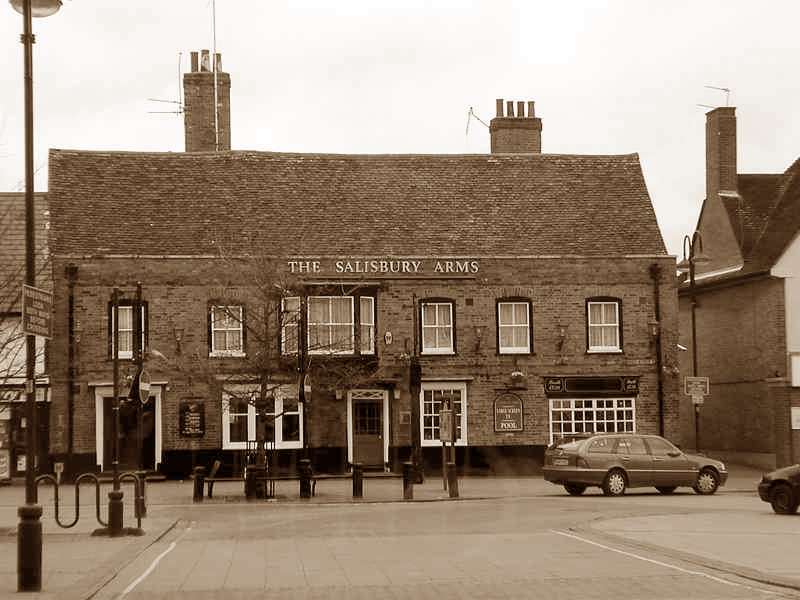
Depp dropped into the Bear hotel for a drink after filming
Pirates of the Caribbean star Johnny Depp breezed into rural Wales at the weekend to shoot scenes for his latest film and joined regulars in a pub for a Saturday night drink.
As the range and strength of alcoholic drinks continues to grow, BBC News Online looks at how to work out exactly how much you are drinking.
Many of us are familiar with the system of measuring alcohol content in "units".
We are told, for instance, that for women 14 units of alcohol a week is the recommended limit, and for men 21.
Many of us have been told a glass of wine is the equivalent of one unit, and a pint of lager two.
But the system was devised over 20 years ago, and since then the strength and variety of drinks available has changed dramatically.
One glass of wine rarely now equals just one unit of alcohol.
This rough guide was based on a glass of wine at 8% ABV (alcohol by volume) in a 125ml glass - a measure and strength no longer widely available.
Nowadays, a standard glass of wine is served in a 175ml glass and is often up to 13% ABV, which adds up to 2.3 units.
Similarly, a half-pint glass of beer is only equivalent to one unit if the alcohol content is 3.5%, but most lagers on sale today are much stronger and a pint could easily be 2.8 units.
How many units?
But there is a sum which helps you work out how many units you have drunk.
You need to know the strength of the drink (%ABV) and amount of liquid in millimetres (one pint is 568ml; a standard glass of wine 175ml).
You multiply the amount of drink in millilitres by the percentage ABV, and then divide by 1,000.
For example, if you order a pint of strong lager at 8% ABV:
1 pint (568ml) X 8 = 4,544
Divided by 1,000 = 4.544, or 4.5 units
That is much stronger than the two units many people assume it would contain - and means just over three pints of strong lager would reach the recommended weekly limit for women.
What about drinking and driving - how many units is safe to drink before getting behind the wheel?
The legal drink-drive limit is 80mg per 100 millilitres of blood.
But this cannot easily be translated into alcohol units as it can be affected by build, sex, whether food has been eaten, and a host of other factors.
Campaigners say there is therefore no safe amount to drink before driving, because it is so difficult to tell what effect the alcohol will have on you.
Another important consideration is how long the each unit will stay in your system.
Only 10 minutes after having a drink, 50% of the alcohol will be in your bloodstream.
After an hour all the alcohol will have been absorbed.
On a typical night out you may easily have 200mg/100ml of alcohol in the blood by midnight, which will not be fully flushed out until the following afternoon.
And contrary to popular belief, it is impossible to speed up the processing of alcohol through your body any faster.
A cold shower or cup of coffee will not help - it just takes time.
Doctors say the proposals focus on crime rather than health
Moves to tackle the UK's binge-drinking culture have been criticised by doctors and charities for not going far enough.
This follows the release on Monday of a new government strategy to deal with the rising costs of alcohol-related crime, disorder and illness.
The British Medical Association called for "concrete action" rather than pilot schemes to tackle the crisis of rising liver disease in young people.
Alcohol misuse charities said more must be spent on treatment and counselling.
It is stronger on cleaning up the streets than on preventing physical harm
Professor Ian Gilmore, Royal College of Physicians
Binge-drinking culture confronted
The government's proposals include a clampdown on pubs serving under-18s and wardens to patrol taxi ranks, under the Alcohol Harm Reduction Strategy for England.
The law is also to be changed so drink-drivers who test positive at the roadside can be charged without a second test at a police station.
"The principle behind it is that rather than spending time taking individuals to the police station, officers will be at the roadside able to catch other potential offenders," a Home Office spokesman said.
Professor Ian Gilmore, chairman of the Royal College of Physicians, said he was concerned the proposals would not curb excessive drinking.
He said: "The strategy calls for 'audits' and 'pilots' where we believe there is already more than enough evidence for action.
Young people must be made aware that having fun does not have to mean getting drunk three or four times a week
Dr Vivienne Nathanson, British Medical Association
'Creative adverts' selling drinks
"It is stronger on cleaning up the streets than on preventing physical harm."
Dr Vivienne Nathanson, the BMA's head of science and ethics, said warning labels on alcohol were needed coupled with a ban on advertising.
"What we need now is concrete action to tackle the crisis," she said.
"It is a tragedy that doctors are starting to see serious liver disease in young people because of alcohol. It is also very expensive for the NHS.
"Young people must be made aware that having fun does not have to mean getting drunk three or four times a week."
Home office minister Hazel Blears told BBC News the strategy was focusing particularly on binge-drinking youths out "to get as drunk as they can".
She wants to see more of a "Continental cafe bar culture" replace excessive drinking, estimated to cost the UK �20bn a year.
Is binge drinking a problem?
In pictures
Ministers say they may introduce legislation such as forcing pubs to contribute to policing costs if the coercive approach fails.
Alcohol campaigners want a more extensive strategy to cut the 33,000 deaths a year from alcohol misuse.
Lesley King-Lewis, chief executive of Action on Addiction, said alcohol services were hugely under-funded.
"Only �95m a year is spent on alcohol services, compared to �500m for drugs," she said.
'Clear challenge'
Happy hours and other drink promotions were criticised, with Eric Appleby, chief executive of Alcohol Concern, proposing a 3%-5% levy on the �200m spent annually by the alcohol industry on advertising.
This money could be ploughed back into health campaigns on alcohol, he said.
Rob Hayward, chief executive of the British Beer & Pub Association, said the government had laid down "a clear challenge to the industry to deliver on its commitment to encourage, support and promote responsible drinking".
Measures proposed in the Alcohol Harm Reduction Strategy for England involve voluntary action by alcohol producers and retailers, and action from the government, police and councils.
Specific measures include:
* Targeting pubs and shops suspected of selling alcohol to under-18s; including police sting operations
* Greater use of exclusion orders and fixed-penalty fines for alcohol-related anti-social behaviour
* Police urged to use more community wardens to patrol areas like taxi ranks at night
* Simpler "sensible drinking" messages and better alcohol education in schools
* Review of the TV advertising code of practice to ensure it does not target young drinkers or glamorise drinking
* "Social responsibility charter" for drinks producers which includes providing clear product information and health warnings
* "Code of good conduct" schemes for shops, pubs and clubs, including providing information on alcohol
* National audit of alcohol treatment services; better training for medical staff
TUBE PATROLS: YOUR VIEWS
Plainclothes anti-terror police are patrolling the London Underground to prevent possible terrorist attacks.
制服警官の数も増やし、私服の警官も中にはいるという状況で、
Security has stepped up....
でしたが、一日の利用客が3500万人(だったと思う)の地下鉄では、
やはり、警官や警備員だけの力ではどうしようもないという事で、
Be more vigilant、不信なものはすぐに連絡を等のキャンペーンを
始めているようです。
BECKS' BOMBING PAIN
David Beckham has spoken of the solidarity among Spaniards in the wake of the Madrid bombings.
The Real Madrid player and England captain said the tragedy had brought together the city - and his team - despite the different nationalies.
"When things like that happen it brings countries and people together whatever their nationality," the star said.
"I'm English and living in Spain, but everyone has become united whatever their nationality and that's a nice thing.
"It shows the strength of the people. It's been tough for everyone, but it's good to be part of the situation."
He added: "What happened has shown solidarity among the people and I hope people can get over such a complicated time."
The former Manchester United midfielder also moved to quash speculation he was considering a move back to Britain.
Press reports last weekend linked him with a multi-million pound bank-busting move to Chelsea.
But Beckham said his long-term future was with Real.
"When speculation starts, it continues," he told reporters.
"But as I said, I'm happy at Real Madrid, I want to stay at Real Madrid and that's the end of that."
Beckham could collect his first major medal in a Madrid shirt on Wednesday night when the team bid for the first leg of a potential treble.
They take on Real Zaragoza in the Copa del Rey final, which is to be staged at the Olympic stadium in Barcelona.
Q&A: Intelligence on Madrid blasts
It is still unclear who was responsible for the attacks in Madrid after the Spanish authorities announced they had arrested five suspects in connection with the blasts.
Some in Spain argue the attacks may be connected to the work of Eta, while others say the Basque separatists could not have planned attacks on such a huge scale.
BBC Security Correspondent Frank Gardner looks at what we know so far about who could be responsible.
Could this have been a breakaway group from Eta or even the result of a collaboration between Eta and al-Qaeda?
Counter-terrorism experts around the world are looking at the possibility that there was a kind of collusion between a violent, fanatical, splinter group of Eta and extremists from outside. There have previously been connections between Eta and the GIA, an Algerian militant group.
Normally al-Qaeda would not work with non-Muslims, as they do not trust them.
But al-Qaeda is not a fixed organisation, it is a shadowy phenomenon, and it is possible that there are people sympathetic to them, who have worked with them.
Al-Qaeda also has form in Spain. They held their final eleventh-hour terror summit in northern Spain in July 2001, where Mohammed Atta, the main September 11th hijacker, briefed the others and sent news to Afghanistan about the imminent attacks.
What are the experts and governments saying about who was responsible?
The UK government is saying officially that it takes its lead from the Spanish investigation, but I can say that privately officials are holding their breath, hoping this is not al-Qaeda.
If this is a Spanish issue, dreadful as that may be, at least it would be contained there.
In the UK, the Joint Terrorism Analysis Centre inside MI5 is taking in all the input so far. It will be compiled into a report for the Joint Intelligence Committee and will be passed to the prime minister and parts of government.
What points to al-Qaeda?
The Spanish government is keeping an open mind and since the investigation is only just underway, that is probably the best thing to do.
There is an analysis going on into the authenticity of the claim sent to a London newspaper office hours after the bombing, claiming that the attacks were the work of al-Qaeda.
There are several factors that point to them. Firstly there is the discovery of a van containing bomb detonators and Koranic chants. The second is the claim of responsibility from an obscure group in Canada, but we can perhaps dismiss that, but the most important is the claim sent to London saying that they did it.
The fact that there were no warnings and that the attacks were so well synchronised also indicates al-Qaeda could have been involved.
What points to Eta?
Some of the forensic analysis has begun already, and this is mainly what is causing the Spanish authorities to say they believe it is Eta.
They are saying that traces of explosives found match those known to be used by Eta and also match a batch stolen and believed to be in Eta's hands.
However, these attacks would be a quantum leap for Eta. Their largest death toll up to now was in 1987 when they killed 21 shoppers in Barcelona, so this would be in a totally different league for them.
According to the Basque newspaper Gara, Eta has denied responsibility. The group has used the newspaper in the past to issue statements. On Friday, Gara said that someone claiming to represent Eta telephoned on Friday to deny government allegations that it carried out the attacks.
Why would al-Qaeda strike Spain?
The main reasons they would want to hit Spain are in revenge for its assistance to the US and UK in the war on terror and its role in Iraq.
It has had a pro-active role in both of these operations.
The London-based Arabic newspaper al-Quds al-Arabi quoted from a statement in which al-Qaeda reportedly claimed responsibility for the attack.
The statement said the bombs were a punishment for Spain's role in Iraq.
It uses phrases such as "we have got behind the lines" and "we have penetrated the crusader land," which is how the group refers to Europe.
Could this happen in the UK?
The simple answer is yes.
We are not screened in our everyday lives, especially on public transport, and we live in an open democracy.
In a way we are living in a twilight zone in Britain, because it has not happened here yet.
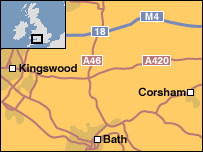
The accidents happened opposite each other at junction 18 of the M4.
The M4 is partially closed after two accidents on the motorway near Bath.
Police say the second crash was caused by a "distracted" driver looking at the scene of the first crash which left one person dead.
Both the east and westbound carriageways were closed after the two accidents, half an hour apart, at junction 18 near the Wiltshire border.
Two westbound lanes were reopened at 1700 GMT, but police are still advising motorists to avoid the area.
People trapped
The first accident, involving two cars and a lorry, happened on the eastbound carriageway at 1437 GMT, and left one person dead.
A team of firefighters cut a survivor and the dead victim out of the wreckage.
Half an hour later, at 1508 GMT two cars crashed on the westbound road only yards away from the first incident, leaving one person with serious injuries.
Firefighters cut six people free from the wreckage.
A spokesman for Wiltshire Fire and Rescue said the second crash was "caused by someone looking at the first one".
Heavy rain is thought to have caused poor visibility in the area at the time.
The accidents have caused huge
AL QAEDA CLAIMS BOMBINGS
A group claiming to be acting in the name of al Qaeda says it was behind yesterday's devastating Madrid train bombings, which killed at least 192 people and injured 1,200 others.
 The accidents happened opposite each other at junction 18 of the M4.